Interview: Food Safety in the Global Context, Codex and Certifee’s Experience at FAO
An interview on the role of Codex Alimentarius in food safety, international trade and the global governance of food chains.
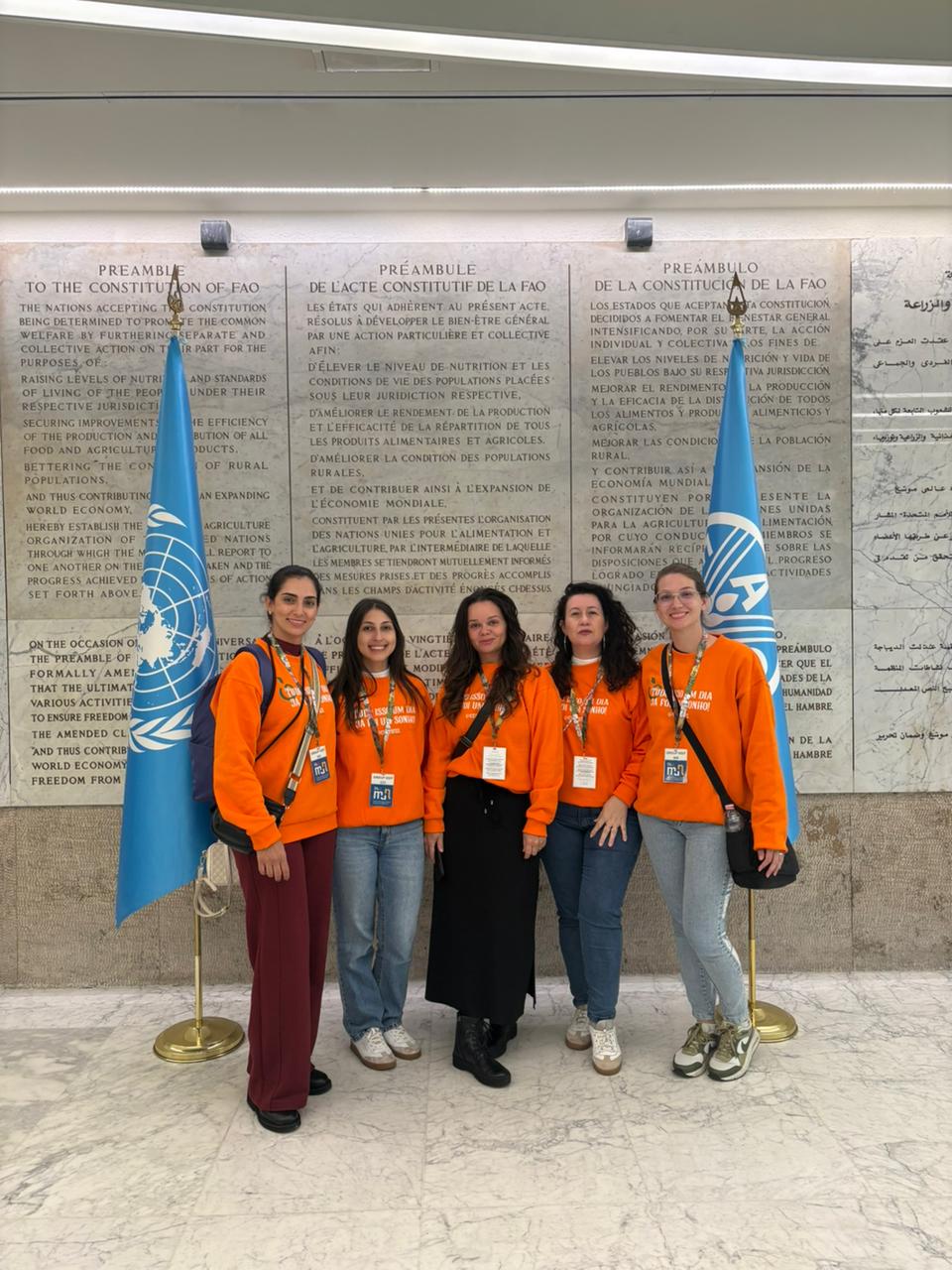
During an institutional visit to the headquarters of the Food and Agriculture Organization (FAO) in Rome, Certifee’s Heads team was at the center of global discussions on food safety. In this interview, Willian speaks with Valesca Bicca Vieira, CEO of Certifee, about the role of the Codex Alimentarius Commission (Codex) and the impact of this body on the food industry and on the global governance of food chains.
Willian
Valesca, for people working in the food industry, Codex often appears as a regulatory reference. But what is Codex?
Valesca
Codex, or Codex Alimentarius, is essentially the major global system of food safety standards. It was created by FAO and the World Health Organization to develop international standards that guide how food should be produced, processed, inspected and traded around the world.
These standards have two main objectives:
protect consumer health
ensure fair practices in international food trade
In practice, Codex works as a global reference point for legislation and international food trade. Many countries use these standards as a basis for their own regulations.
Willian
So it directly influences international trade?
Valesca
Exactly. Codex is fundamental to global food trade.
When two countries discuss sanitary rules or disputes related to food safety, the technical reference standard is often Codex. This helps harmonize requirements between countries and reduce trade barriers.
For example, pesticide residue limits, hygiene standards, food labeling and microbiological criteria are often defined or influenced by Codex recommendations.
So when we talk about global food safety, we are inevitably talking about Codex.
Willian
What is the relationship between Codex and FAO?
Valesca
Codex operates within the FAO/WHO Joint Food Standards Program, and the Codex Secretariat is located at FAO headquarters in Rome.
This means technical discussions are built on scientific evidence, involving experts, governments, international organizations and industry observers.
The result is a set of science-based global standards that guide how food should be produced and controlled in different countries.
Willian
Does Brazil have a leading role in this scenario?
Valesca
Yes, very much so.
A strong example is Brazilian expert Guilherme Antonio da Costa Junior, who was elected Chairperson of the Codex Alimentarius Commission. This is extremely relevant because it means Brazil has an active voice in the global governance of food safety.
He has a long track record in international negotiations and sanitary regulation, and this leadership shows recognition of Brazilian technical expertise in this area.
For people working in food safety, this is a reason for pride.
Willian
You were recently at FAO. What was that experience like?
Valesca
It was a very symbolic experience for us.
Being at FAO means being at the center of global food safety governance. Discussions held there directly impact public policies, production chains and regulatory standards around the world.
Taking Certifee’s Heads team into that environment was a way to reinforce something we strongly believe:
food safety is not only a technical requirement.
It is a global commitment to health, science and sustainability.
Willian
What is the main message you bring from that experience?
Valesca
The main message is that food safety is a shared responsibility.
It involves governments, industry, science and international organizations.
When we align with global standards such as Codex, we support three essential outcomes:
consumer protection
trust in international trade
integrity across food chains
For Certifee, this global vision reinforces our mission: connecting Brazilian companies to international best practices in food safety and feed safety.